
Melina Nguyen
Melina Nguyen
From modeling the beats of his favorite producers' songs to now being their contemporary, Beatzbyrrose is taking his industry skills and production talent into the limelight.
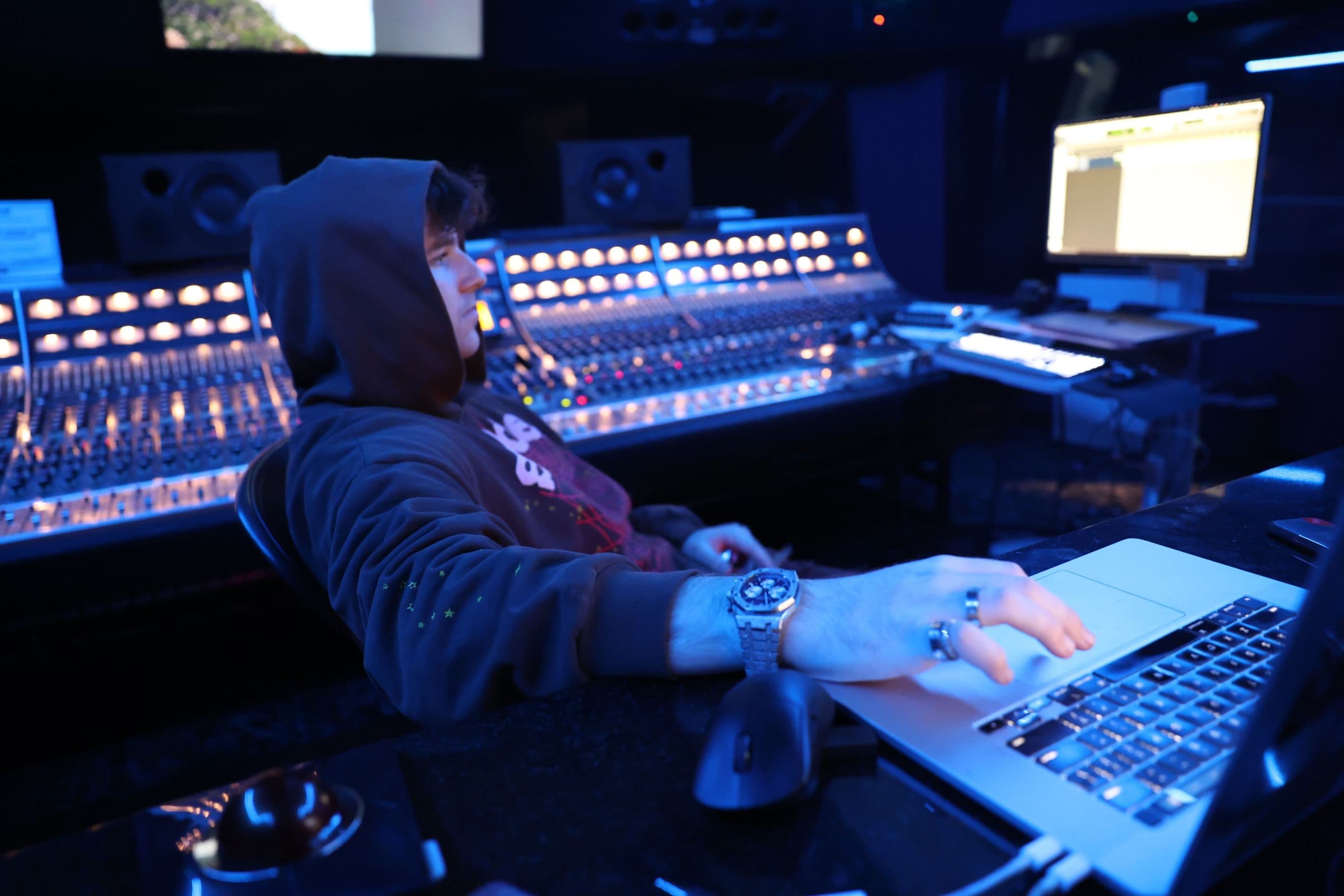
From Los Angeles to Miami to New York and back, the past few years have been a whirlwind for Jason Rosenberg. When he began making beats at his parents’ home as a ninth grader, the now Billboard-charting producer couldn’t have predicted working alongside some of his most coveted musical influences ten years later.
Though he’s been relatively distanced from the public eye throughout his career, Rosenberg, whose stage name is Beatzbyrrose or simply Rose as a nickname, has made substantial moves for himself within the industry, breaking into the 808 Mafia and Opium universe. Now, he’s ready to work on his branding and let people know, “Rose is next up.”
An established industry producer, Rose’s extensive production credits range from Young Thug’s “Money On Money,” Future’s “PRESS THE BUTTON,” Trippie Redd’s “Checklist,” and Swae Lee’s “FLAMMABLE,” and more—including several unreleased tracks with artists like Destroy Lonely.
The 24-year-old’s music journey has hardy roots; he grew up playing guitar and piano, DJed in college for a bit, and eventually landed on producing. His hip-hop and trap sound is heavily shaped by Gucci Mane, Future, and G-Eazy, as well as the work of Southside, Mike WiLL Made-It, and ATL Jacob. “In school, I’d be watching videos of Southside and Zaytoven and all of them making beats. I just watched the videos, and I was like, ‘Damn, I really want to do this,’” he recalled. “I’m very determined. Once I do something or want to learn it, [I] just got fully on it.”
Soon after, Rose acquired the beat-making machine Zaytoven had been using and began practicing every day. At 16, the producer landed his first placement on a song with Atlanta-based rapper Yung Mal, who was signed to Gucci Mane. Rose didn’t rely on any tutorials or formal lessons. Rather, he listened to songs and tried to study by ear, becoming a self-taught producer. “I didn’t know anyone. It was just all this time and me working and grinding and spending all this time.”
When Rose was enrolled at San Diego State during the COVID-19 era, he continued to grind on beats, spending at least 14 hours a day on music in his dorm—missing classes and time with family, as well as feeling depressed. “I didn’t wanna be there. I was in class learning about geometry or whatever [and] I’m watching videos on producers talk about their come-ups,” he said. “I’m not against school, but I didn’t learn anything in school.” While his professors were trying to teach about making music, Rose was already in the studio and putting those practical skills to use. During 2020, he would visit Swae Lee’s house and cook up with the artist, even missing his finals to collaborate in person. From meeting Lee at a gas station to organizing a collaborative tape, Rose was etching away at his own how-to tutorial on breaking into the music industry.
What he ended up taking away from his two years at university was independence and work ethic: embracing the “black sheep” mentality, focusing on his craft, and taking leaps of faith. “Even when there were people along the way who told me it wouldn’t happen, I feel like you use it as motivation and drive and are able to prove people wrong. I feel like I’ve been doing that throughout my whole career,” he explained. And by his sophomore year, Rose dropped out of college to pursue music production full-time.
Though his family believed in him, they tried to convince him to find a plan B that would support him financially. However, that wasn’t ever in his cards. “ I’ve never thought ever about ‘I need to get a job’ or ‘I need to do this’ or ‘This isn’t going to work out,’” he detailed. “I always really been to myself. It’s not like I signed to a producer… I kind of did everything on my own.”
Using some money he saved up during school, Rose decided to move around, and in 2023 he ultimately attended Future’s camp, where he met and collaborated with other producers who began to notice him. He noted that Future, also known as “Pluto” by close friends, took a particular liking to him and helped introduce Rose to others in the industry.
Future even anointed him with his producer name while they were at the studio house in Miami. “It was just after a month of me being around and finally, he talked to me and he was just like, ‘That boy Rose, Beatzbyrrose,’ and then a month later, he ended up doing my tag. It was just a full-circle moment,” he recited, describing how Future was his first true supporter who saw something in him before anyone else did.
The beginning was tough, Rose explained, since he was practically couch-surfing with no guaranteed salary or housing. He ended up living at Future’s house for a year, trying his best to soak up all the knowledge at his disposal and eventually putting out placement beats for the rapper during sessions. Then, his lawyer-turned-manager Matt Llew straightened him out on the business side, securing his deal with Sony Music and teaching him about labels and contracts. Above all else, a watershed moment for the producer was befriending Southside, who took Rose under his wing. “Southside’s really taught me just how to really carry myself and just to keep going and stay down and work… Just even being in the room with South, I’ve learned a ton, just how to put songs together.” The iconic trap producer even mentioned Rose as an upcoming young producer during Lucid Monday’s joint sitdown interview with Wheezy in December 2024. Rose, who used to find Metro Boomin drum kits on Reddit as a kid, was finally in the same rooms with his idols—now mentors.
From being a wallflower in the studio to creating true connections with industry producers, Rose credited his progression to the established professionals he looked up to and are now his peers. Unlike other producers his age, he has cultivated relationships with the artists he works with, including Trippie Redd, who’s allowed him to shape his upcoming album over the past year and a half. His sincere approach to networking has led him to work with Destroy Lonely and Ken Carson, two notable members of the innovative rap collective founded by Playboi Carti.
While he was cooking up in the studio, which contained neighboring rooms with Future, Lil Baby, and Destroy Lonely, Rose as well as his friend and 808 Mafia member Lil 88 were cooking up daily, sliding by each of the artists’ rooms. Most of his songs with Destroy Lonely are in the vault, but his next album could feature some of the 20 beats produced by Rose. “The Opium guys are super influential, and it was cool because I met Lonely at a time before he got super big… Now, I’m just trying to work with the next guys coming up and really build a sound with them.”
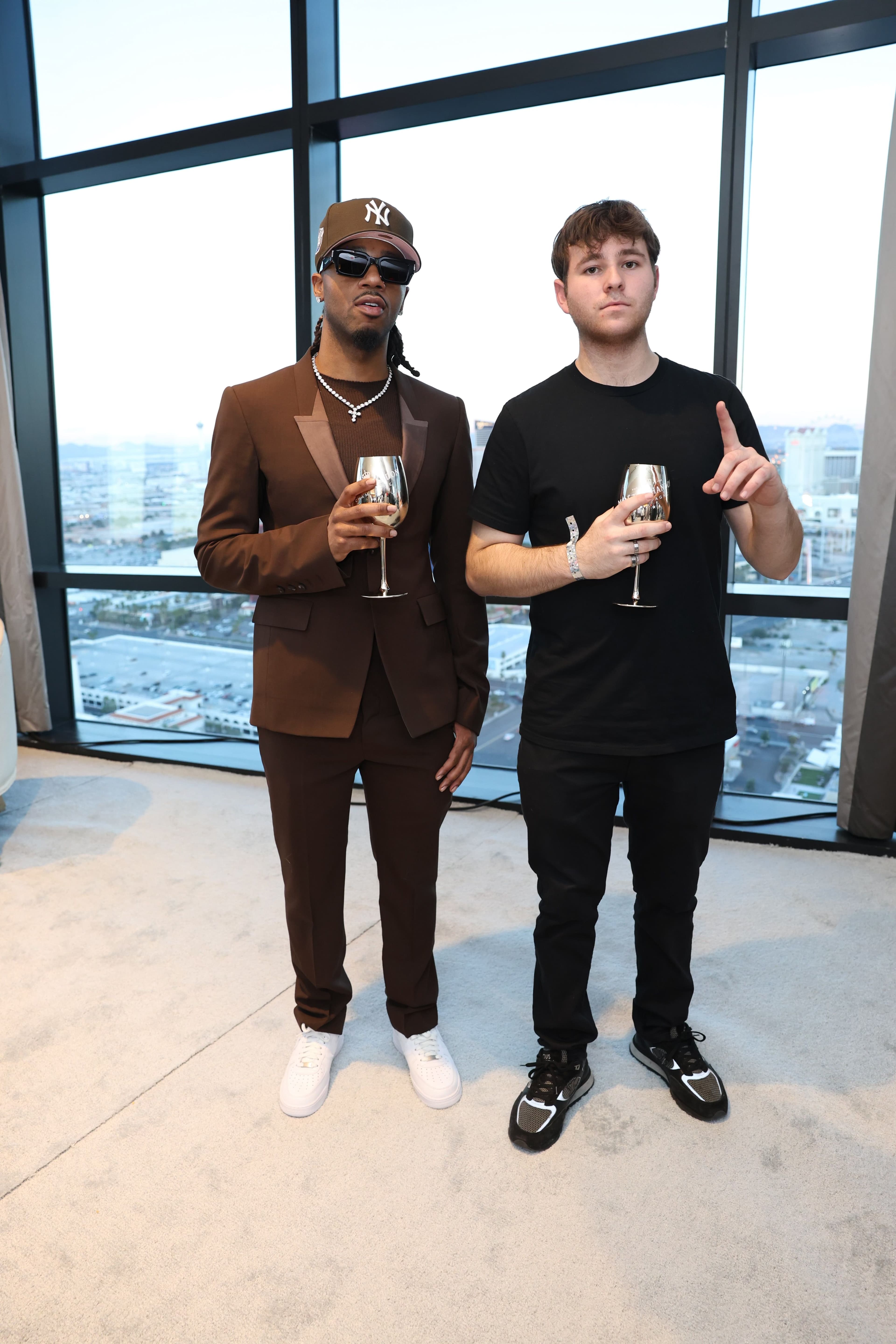
Rose points to his versatility in the studio as a selling point—being able to make loops or drums and pass them along to up to eight producers at a time. Outside of FL Studio, he plans to branch out to DJing at his own shows, similar to Metro Boomin’s. He’s also expressing interest in making records for pop and mainstream artists like The Weeknd, Chris Brown, Drake, and Justin Bieber.
He’s also looking forward to building his own roster of young producers, already having recruited his first protégé. He expects to add three more producers to his team in the next year and connect them with artists for their own deals, acting as a guide and mentor as Southside did for him. “Long-term, [I want to] be a household name and to have people look at me how I looked at all these guys I looked up to… I definitely want to help and actually, genuinely make good songs.”
“I’ve just always been myself. I’ve never tried to put on a front or facade or like I’m from the streets… no, I’m a white Jewish kid from the Valley that made trap music and, like, did it and now I’m in these rooms,” Rose said.
After putting his finishing touches on Trippie Redd’s album, Rose is continuing to put his head down and focus on his collaborations with Ken Carson and Rod Wave. His priority remains working with both newer-generation artists and industry pillars, though a self-released project could be in the mix in a year or so.