
Malik Peay
Malik Peay
Daniel Caesar’s right hands, Matthew Burnett and Jordan Evans of Golden Child Recordings, discuss how they are paving the way for the next generation of Toronto artists.
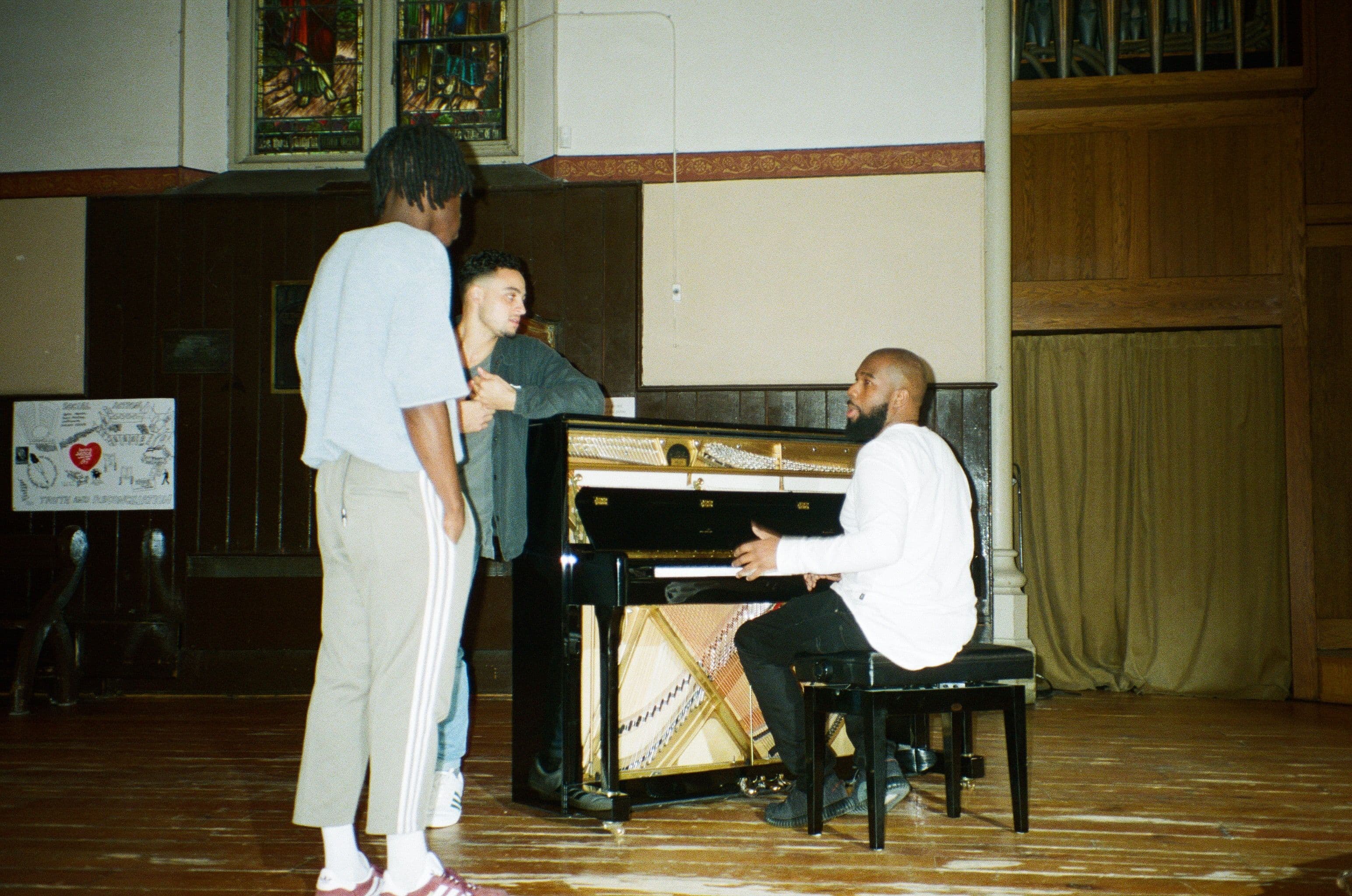
Matthew Burnett and Jordan Evans are architects of sonics. Together, they pioneered the production of famed hip-hop anthems of the 2010s. They have collaborated with music visionaries, such as Drake, Jay-Z, and more, to develop that unique merging between soulful, experimental samples and hip-hop. “We started off as beatmakers,” Burnett beams in and tells Lucid Monday. “[Jordan and I] didn't get the opportunity to actually collaborate with the artists. In a way, that encouraged us to work with the artists and songwriters that were close to us and built with those artists and that sent us down the path that we're on today.”
More than a decade later, Burnett and Evans’ creative partnership and unspoken chemistry has spawned an independent label, Golden Child Recordings. The Canadian label’s leading artist and founder, Daniel Caesar, has a symbiotic relationship with his managers and producers who have crafted the emotional landscapes of his acclaimed past works like Freudian (2017). Son Of Spergy (2026) was helmed outside of the label. “There is a perception that it's not possible to build independently," Evans reaffirms. “We overcame that but in building our label, we realized that if you decide to build something independently, there is a reason why a record label is structured the way it is.”
The Toronto producers started out as creative confidants to Caesar before becoming his managers early on in his career. The deeply melancholic yet introspective aspects of Caesar’s work is a collaborative approach that the trio have adopted since the beginning. Caesar is a master at creating heartbreaking melodies through his voice that are amplified by layered instrumentation and stacked vocals. The titular track of Freudian depicts how Caesar loves to toy with the listener even if that means he gives the listener over a full minute of downtime to collect themselves from the sonics he has alchemized with Evans and Burnett.
“Definitely Daniel's idea,” Evans laughs. “From early on he always expressed to us that if I do something where I feel, I want to try it. Sometimes people appreciate it, other times, they don't get it. He is expressing himself creatively and it is our responsibility to make sure he has a space to do it. That choice was unorthodox and memorable in Freudian.” Burnett adds, “That moment really highlights the beauty of being independent.”
With Son Of Spergy, Caesar’s managers made sure he had the scale he wanted to execute his 2026 tour for the album. “Going from being a producer and making music in the studio to seeing it transferred to a live stage is really eye-opening,” Burnett explains how Caesar directs his performance while maintaining a sort of intimacy that can be lost at times in large venues. “Live performance influences how you create music. This could be a cool intro or this feels like an outro. You get this immersive experience of being in the studio as if you are creating the music and imagining it on a live stage.”
Evans has transitioned from a managerial partner to a cultivator of creative inspiration for the artists he builds with. “Even if it’s a lucrative opportunity, it is very meaningful to us for us to not kill the momentum of the creative momentum.” Golden Child Recordings sets out to be an insular community for bold and individualistic musicians. They aim to protect their talents and discover innovative ways of cultivating their crafts through artistic evolution.
The executive producers of several chapters of Caesar’s musical career describe the Canadian crooner as an album artist. Son Of Spergy was mostly created in Electric Lady Studios in New York City. “There is something incredible about being able to tell an entire story over the course of 12 songs. That is my favorite process. When we can sort of listen to everything and see how we're going to craft an album.”
Caesar’s newest album is an amalgamation of heavenly production and gospel-influenced arrangements. “We all come from different musical backgrounds such as the church, R&B, and hip-hop,” Burnett defines. “We are pushing our city forward in that way. We find ourselves in spaces where we want to give back to the next generation, the next wave of artists, producers, and songwriters who come up. We want to give them the keys or advice or offer our ears for listening.”